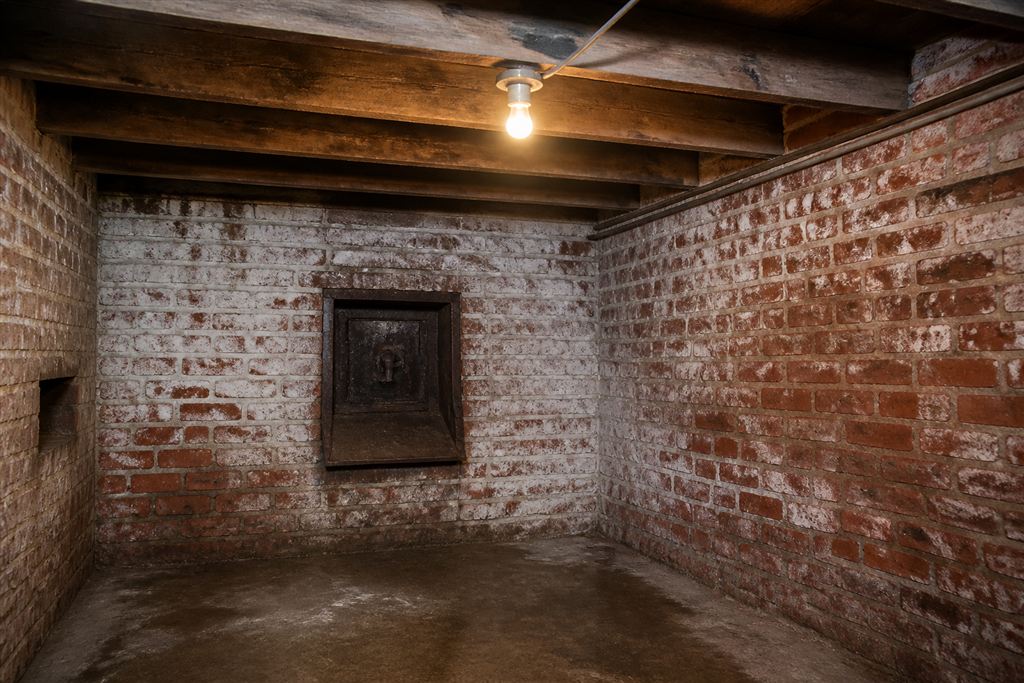
BS 8102 in the language of an LS17 coal cellar
Under a 1930s LS17 coal cellar, BS 8102 is not an architect’s pamphlet. It is three answers to clay water and a party wall:
Type A is a barrier — slurry, sheet, coat. It needs the wall never to crack and the coal-chute joint never to open. Alwoodley Park brick sitting on clay, next to a neighbour’s cellar, is a bad bet for that.
Type B is waterproof concrete as the tank, designed from the pour. Interwar Leeds suburbs were not poured that way. Skip it unless you are building new, which this neighbourhood mostly is not.
Type C is a drained cavity. Clay water — including the wet ground that feeds Alwoodley Beck under King Lane — is allowed to wet the outside face. We catch it on the inside and take it away. The room stays dry enough to use.
A Primley Park homeowner on the cellar stair does not need the rest of the standard. bs8102 is the search phrase; the survey is how it is applied.
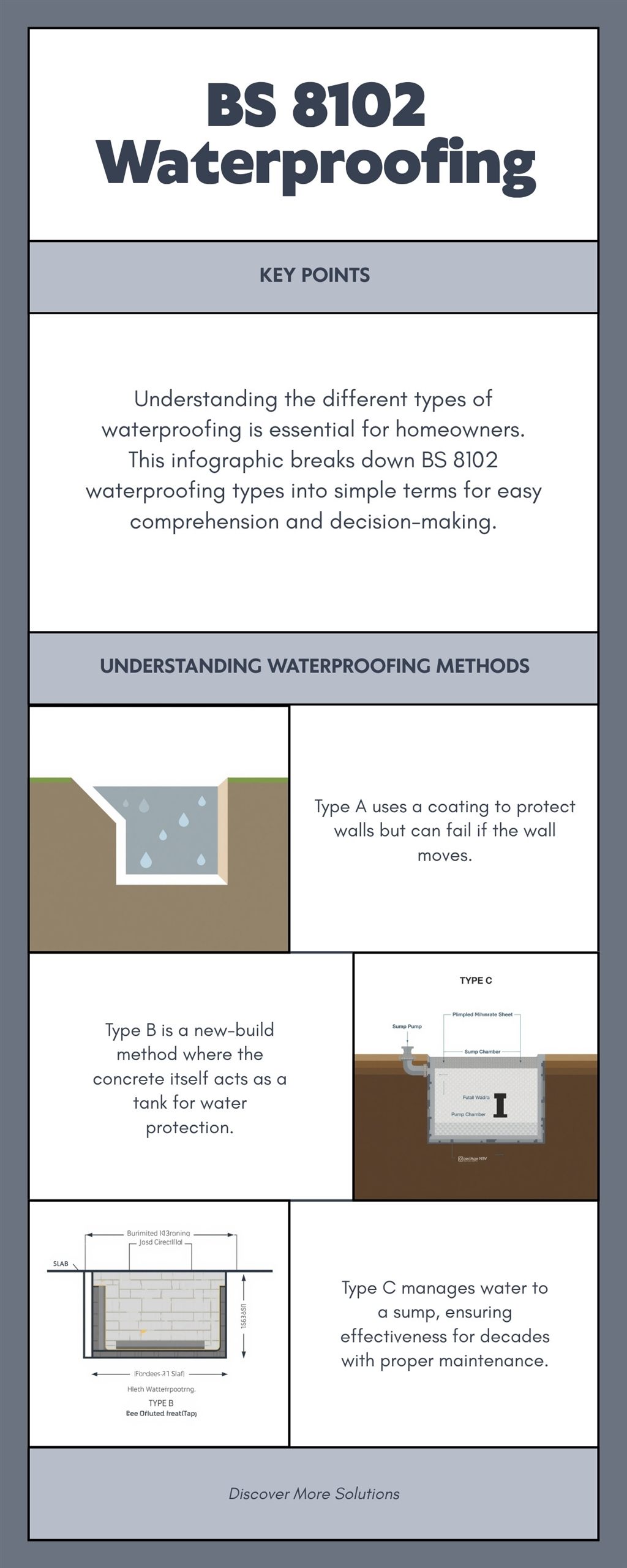
Diagram — BS 8102 types in plain English. Illustrative, not a site photo.
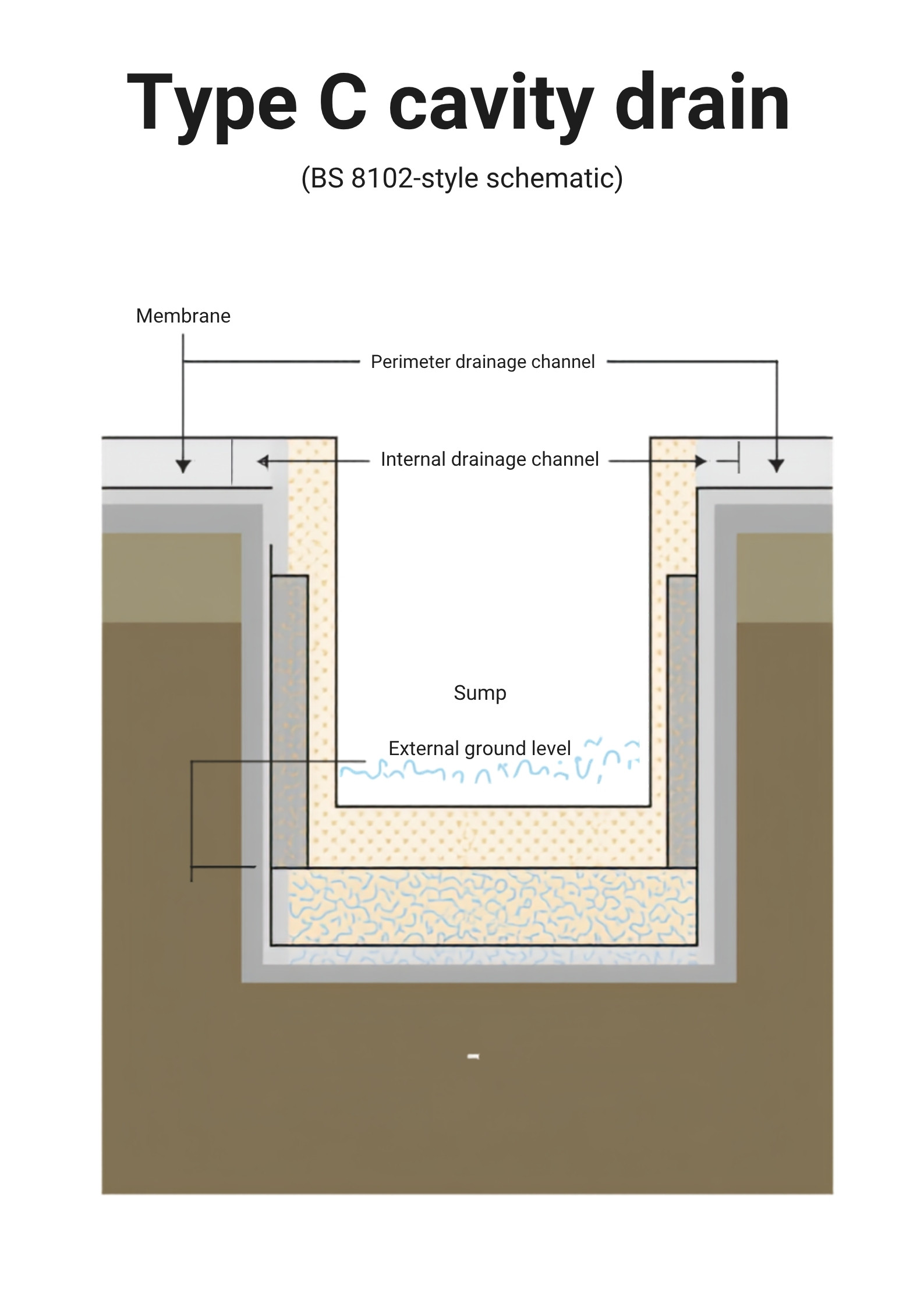
Diagram — how a Type C cavity drain system works. Illustrative, not a site photo.
Where a sump can discharge on this plot type
Alwoodley plots are larger than a mill terrace, but they are not empty fields.
- Rear combined drain — the usual outfall on a 1930s semi. The survey finds the invert. If the drain is higher than the cellar floor, the pump exists for a reason.
- Front garden on The Avenue / King Lane — last resort. Mature oaks and beeches, neighbour-sensitive verge, sometimes a root-protection problem. We do not cut a new trench across the front as plan A.
- Sandmoor / Alwoodley Lane detached — longer runs, possible light-well, more choice of chamber location, still not a licence to open the whole lawn.
- Golf-course streets (Sunningdale, Turnberry and the rest) — many have no cellar; if they do, later drainage may already be plastic and shallow. Record it; do not assume a 1930s invert.
Noise, lid, and sleeping rooms above: Sump pumps in Alwoodley cellars
Cellar waterproofing systems, without the catalogue
A Type C system on this stock is membrane + channel + sump + pump + a legal outfall + a maintenance path to the lid. It is not a brand name. It is not three competing product families listed as if we were a merchant.
Waterproofing cellar walls with Type C still leaves the original brick in place. That matters on a semi: we are not rebuilding the party wall.
Tanking a cellar — what we actually install Cellar tanking vs Type C Cost variables
FAQs
Is Type C overkill for a one-room Alwoodley coal cellar?
Not if that room floods or stays wet and you use it. Overkill is a full system in a dry meter cupboard on The Fairway. The survey is the filter. Ticket for a real Type C job is not a few hundred pounds.
Do we need Type C if we only get damp after rain on the golf-course side of King Lane?
Rain-after-wet-ground is exactly the Alwoodley Beck / clay pattern. A land-drain repair might be part of the answer; a slurry coat on the inside is usually not. Type C manages what still arrives. The survey says which.
Will a cavity drain membrane make the cellar smaller?
The dimpled sheet takes millimetres, not feet. On a coal hole every millimetre is noticeable, which is why the survey measures headroom and the stair before anyone promises a future conversion.